Health & Medical · Liver blood tests and interpretation
Liver Function Test Chart: ALT, AST, ALP, Bilirubin, Albumin and INR
Compare common liver-panel values, identify hepatocellular and cholestatic patterns, understand misleading results, and act on urgent symptoms.
Abnormal liver tests can reflect liver, bile-duct, muscle, bone, blood, nutrition, medicine, or systemic problems. Do not diagnose yourself, start a “detox,” or stop an essential medicine from one result. Seek urgent care for confusion, vomiting blood, black stool, suspected overdose, severe drowsiness, or jaundice with fever or severe pain. Read the ChartsLoom Disclaimer.
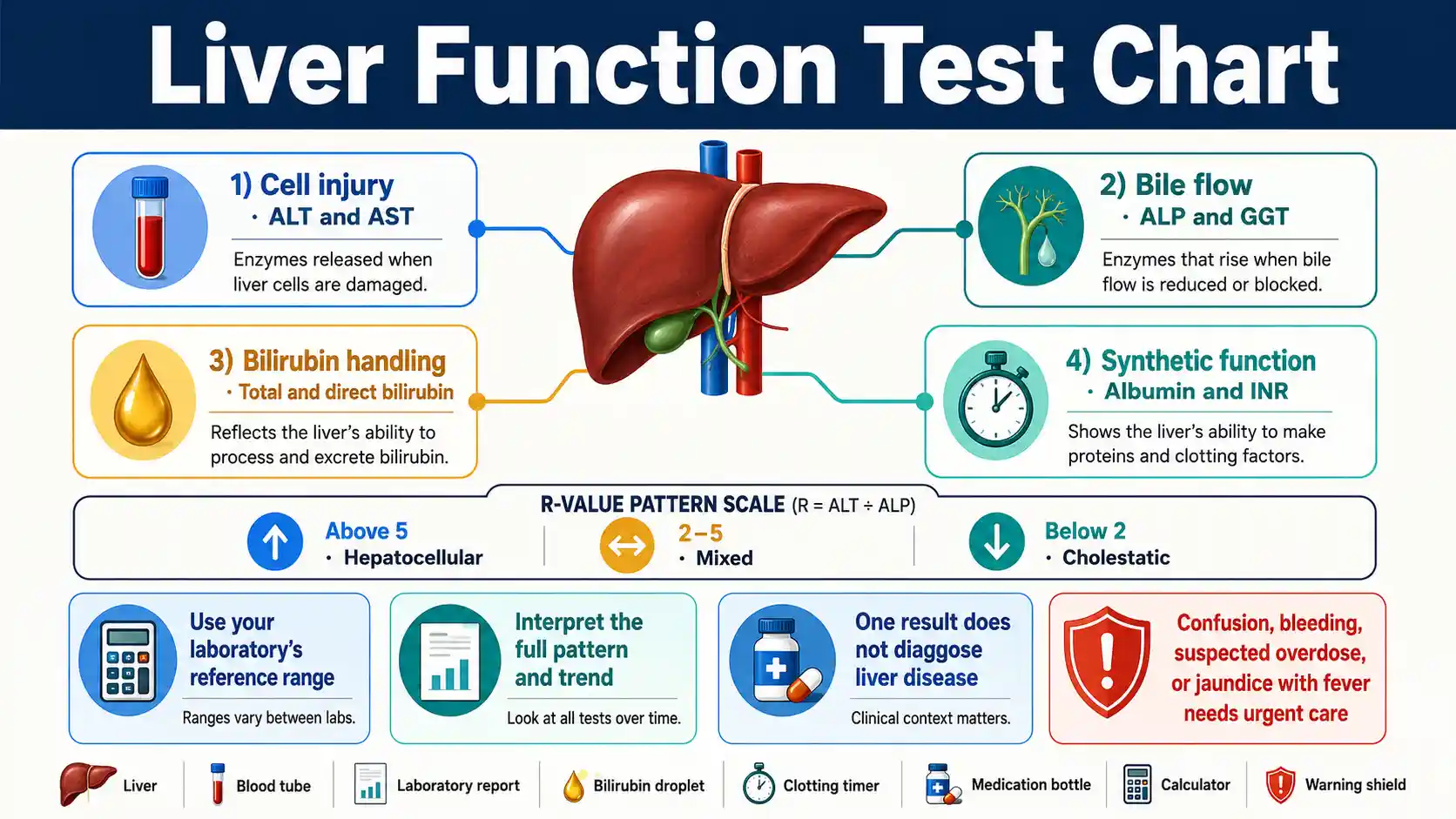
What do liver function test results mean?
ALT and AST mainly show liver-cell or tissue injury. ALP and GGT help describe bile-flow problems. Bilirubin shows production and excretion balance. Albumin and PT/INR add liver-synthesis context. The pattern and trend matter more than one isolated number.
The AASLD approach to elevated liver enzymes recommends classifying the pattern and evaluating bilirubin, PT/INR, exposures, viral risk, and imaging needs.
Cell-injury markers
ALT and AST
Higher values show enzyme release, not the exact amount of fibrosis or remaining liver function.
Cholestasis markers
ALP and GGT
A disproportionate ALP rise suggests a cholestatic pattern after confirming a liver source.
Pattern tool
R-value
Compares ALT and ALP with their own laboratory upper limits.
Function context
Albumin and INR
Interpret with nutrition, kidney loss, anticoagulants, vitamin K, and the speed of change.
Common Liver Panel Reference Chart
These are example adult intervals from a general reference source. The range printed beside your own result is the correct comparison because methods, populations, and units differ.
Swipe horizontally inside the table to view every column.
| Test | Example adult interval | Main role | Key caution |
|---|---|---|---|
| ALT | 4–36 U/L | Marker of liver-cell injury — Liver-cell injury marker | A normal result does not rule out chronic liver disease, and the level does not measure remaining liver function |
| AST | 8–33 U/L | Marker of liver or extrahepatic cell injury | Muscle, heart, and red-cell injury can raise AST |
| Alkaline phosphatase | 20–130 U/L | Marker of bile-duct or bone-related enzyme activity | Bone growth, pregnancy, and bone disease can raise ALP |
| Total bilirubin | 0.1–1.2 mg/dL | Reflects bilirubin production, processing, and excretion | Fractionate into direct and indirect bilirubin when the pattern is unclear |
| Direct bilirubin | Below 0.3 mg/dL | Conjugated bilirubin available for excretion | Higher direct bilirubin can occur with hepatocellular dysfunction or cholestasis |
| Albumin | 3.4–5.4 g/dL | Longer-term protein synthesis and nutritional context — Synthetic function context | Low values also occur with inflammation, kidney loss, malnutrition, or fluid overload |
| Total protein | 6.0–8.3 g/dL | Albumin plus globulins | An abnormal total may reflect immunoglobulins or hydration rather than liver failure |
| GGT | Use the laboratory interval | Supports a hepatobiliary source when ALP is elevated | Alcohol, medicines, smoking, and metabolic factors can raise GGT |
| PT/INR | Use the laboratory interval | Rapid clotting-factor synthesis marker — Rapid function context | Warfarin, vitamin K deficiency, DIC, and other causes can prolong PT/INR |
U/L = units per liter; mg/dL = milligrams per deciliter; g/dL = grams per deciliter.
- • Do not transfer an interval from another laboratory when your report provides its own upper and lower limits.
- • Children, adolescents, pregnancy, older age, and sex-specific methods may use different intervals.
- • ALT, AST, ALP, and GGT are mainly injury or cholestasis markers; albumin and PT/INR provide more direct functional context.
Download or export
One panel, different questions
How liver-panel tests fit together
ALT and AST are not direct measures of liver function. Albumin and PT/INR add synthetic-function context, while ALP, GGT, and bilirubin help describe bile flow and excretion.
Hepatocyte injury
ALT · AST
Enzymes released when liver cells or other tissues are injured
Cholestasis
ALP · GGT
Bile-duct and enzyme-induction context; ALP may also come from bone
Bilirubin handling
Total · Direct
Production, conjugation, and excretion of bilirubin
Protein synthesis
Albumin
Longer-term synthesis plus nutrition, inflammation, loss, and fluid balance
Clotting-factor synthesis
PT · INR
Faster functional context, but affected by anticoagulants and vitamin K
A normal ALT or AST does not exclude fibrosis, steatotic liver disease, chronic viral hepatitis, or compensated cirrhosis. Use risk factors, trends, imaging, and clinical assessment.
Liver Test R-Value Guide
Enter ALT and alkaline phosphatase with the upper limits printed by the same laboratory. The guide compares their relative elevation and labels the biochemical pattern.
Enter positive ALT and ALP values plus their laboratory upper limits. Bilirubin is optional. No information is stored or transmitted.
The R-value labels a laboratory pattern only. It does not diagnose the cause, measure fibrosis, or rule out liver failure. Confusion, vomiting blood, black stool, severe drowsiness, suspected overdose, or jaundice with fever or severe pain needs urgent care.
What Each Liver Test Measures
A liver panel combines markers of cell injury, bile flow, bilirubin handling, and protein synthesis. Interpret the pattern rather than one value in isolation.
Swipe horizontally inside the table to view every column.
| Test or group | What it mainly reflects | What a high or low result may suggest | What it cannot prove alone |
|---|---|---|---|
| ALT | Hepatocyte injury — Hepatocyte injury marker | Higher ALT suggests liver-cell membrane injury | Cause, fibrosis stage, or functional capacity |
| AST | Liver or other tissue injury | Higher AST may arise from liver, muscle, heart, or hemolysis | A liver source without supporting context |
| ALP | Bile-duct or bone enzyme activity — Cholestasis or bone marker | Higher ALP may indicate cholestasis or a non-liver source | Obstruction without GGT, imaging, or other confirmation |
| GGT | Hepatobiliary enzyme induction | Supports liver or bile-duct origin of an elevated ALP | A specific diagnosis; GGT is sensitive but not specific |
| Total and direct bilirubin | Production, conjugation, and excretion | Higher bilirubin can produce jaundice and narrow the pattern | The cause without fractionation, CBC, enzymes, and clinical history |
| Albumin | Protein synthesis over weeks plus distribution and loss | Low albumin can accompany advanced liver disease | Liver failure because many non-liver conditions lower albumin |
| PT/INR | Clotting-factor activity over hours to days — Synthetic function marker | Prolongation can reflect impaired synthesis | Liver failure when anticoagulants, vitamin K deficiency, or DIC are possible |
| Platelet count | Portal-hypertension and marrow context | A falling count may accompany splenic sequestration in chronic liver disease | Cirrhosis because many disorders lower platelets |
- • The term “liver function tests” is common, but several panel components are injury markers rather than direct function tests.
- • A normal enzyme level does not guarantee normal liver structure or exclude fibrosis.
- • Trend, symptoms, medication exposure, alcohol use, metabolic risk, viral risk, and imaging often change interpretation.
Download or export
High enzymes do not automatically mean liver failure
ALT and AST can rise when cells are injured, but the concentration does not directly show how much liver function remains. The MedlinePlus liver-test guide groups injury enzymes with bilirubin, albumin, total protein, and PT so clinicians can interpret several liver roles together.
Liver Test Pattern Chart
The relative rise in ALT and ALP helps describe the biochemical pattern. A pattern guides evaluation but does not identify the cause.
Swipe horizontally inside the table to view every column.
| Pattern | Typical dominant finding | Common clinical questions | Important limits |
|---|---|---|---|
| Hepatocellular | ALT and AST rise more than ALP — Aminotransferase-predominant pattern | Viral hepatitis, steatotic liver disease, ischemia, autoimmune disease, medicines, supplements, toxins | AST and ALT magnitude does not equal fibrosis stage or remaining function |
| Cholestatic | ALP rises more than ALT and AST — Alkaline-phosphatase-predominant pattern | Bile-duct obstruction, cholangitis, primary biliary disorders, infiltrative disease, medicine effects | Confirm a liver source because ALP also comes from bone and placenta |
| Mixed | ALT and ALP are both meaningfully elevated | Drug-induced injury, viral disease, biliary disease, overlapping processes | The same cause can shift pattern over time |
| Isolated bilirubin | Bilirubin rises while enzymes are near baseline | Fractionate bilirubin; consider hemolysis, Gilbert syndrome, impaired conjugation, or early obstruction | Total bilirubin alone cannot distinguish production from excretion problems |
| Synthetic dysfunction | Albumin falls or PT/INR prolongs — Possible function impairment | Chronic advanced disease, acute severe injury, vitamin K deficiency, anticoagulants, systemic illness | Neither marker is liver-specific |
| Normal enzymes with risk factors | ALT, AST, and ALP remain within range | Steatosis, fibrosis, chronic viral disease, or compensated cirrhosis may still be present | Normal enzymes do not rule out structural disease |
- • Use the laboratory upper limit of normal, not a universal number, when comparing relative elevations.
- • GGT or ALP isoenzymes can help when the source of ALP is uncertain.
- • Bilirubin, albumin, INR, symptoms, and imaging add severity and functional context that the R-value does not provide.
Download or export
R-Value Interpretation Chart
The R-value compares ALT and ALP with their own upper limits of normal: R = (ALT ÷ ALT ULN) ÷ (ALP ÷ ALP ULN).
Swipe horizontally inside the table to view every column.
| R-value | Pattern label | Worked example | Interpretation |
|---|---|---|---|
| Above 5 — Hepatocellular threshold | Hepatocellular | ALT 300/40 = 7.5; ALP 150/120 = 1.25; R = 6.0 | ALT is disproportionately elevated compared with ALP |
| 2 through 5 — Mixed threshold | Mixed | ALT 160/40 = 4.0; ALP 240/120 = 2.0; R = 2.0 | Both hepatocellular and cholestatic components are present |
| Below 2 — Cholestatic threshold | Cholestatic | ALT 80/40 = 2.0; ALP 360/120 = 3.0; R = 0.67 | ALP is disproportionately elevated compared with ALT |
| Not interpretable | No meaningful elevation or missing ULN | ALT and ALP are both within range, or a laboratory ULN is unavailable | Do not force a pattern classification from normal or incomparable values |
ULN = upper limit of normal from the same laboratory report.
- • The R-value does not include bilirubin, albumin, INR, symptoms, imaging, or timing.
- • Use the earliest relevant values when evaluating a new suspected medication or supplement reaction.
- • The R-value classifies a biochemical pattern; it does not diagnose drug-induced liver injury or any specific disease.
Download or export
The R-value describes a pattern, not a diagnosis
R compares ALT and ALP with their own laboratory upper limits. Above 5 is hepatocellular, 2–5 is mixed, and below 2 is cholestatic. The ACG abnormal liver chemistry guideline stresses confirmation, history, and cause-based evaluation rather than diagnosing from one ratio.
Bilirubin Pattern Chart
Bilirubin fractionation helps separate increased production or impaired conjugation from impaired excretion and cholestasis.
Swipe horizontally inside the table to view every column.
| Pattern | Typical accompanying findings | Possible explanations | Practical next step |
|---|---|---|---|
| Predominantly indirect bilirubin | Direct fraction remains low; liver enzymes may be normal | Hemolysis, Gilbert syndrome, impaired conjugation, fasting-related rise | Review CBC and hemolysis markers and interpret with history |
| Predominantly direct bilirubin with high ALP/GGT | Dark urine, pale stool, itching, or duct symptoms may occur — Cholestatic clues | Cholestasis, bile-duct obstruction, cholangitis, hepatobiliary disease | Prompt clinical review; imaging is often considered |
| Predominantly direct bilirubin with high ALT/AST | Hepatocellular pattern and jaundice — Hepatocellular jaundice pattern | Acute hepatitis, drug-related injury, ischemia, or other hepatocyte dysfunction | Assess severity, exposure history, INR, symptoms, and cause |
| Total bilirubin high with anemia or hemolysis evidence | Low hemoglobin, high reticulocytes or LDH, low haptoglobin | Accelerated red-cell breakdown | Evaluate hematologic and liver findings together |
| Bilirubin detected in urine | Conjugated bilirubin is present in the bloodstream | Hepatobiliary disease or obstruction may be present | Do not dismiss a positive urine bilirubin when symptoms or blood tests are abnormal |
| Jaundice with near-normal enzymes | Bilirubin abnormality dominates | Gilbert syndrome, hemolysis, inherited transport disorders, or an evolving process | Fractionate bilirubin and avoid assuming liver-cell injury |
- • Direct and conjugated bilirubin are related terms but laboratory methods can differ.
- • Newborn bilirubin interpretation uses age-specific pediatric thresholds and is outside this adult-focused chart.
- • Jaundice, dark urine, pale stool, fever, or significant pain warrants timely medical assessment.
Download or export
Liver Test Limitations and False Signals
Several common conditions change liver-panel results without matching the amount or cause of liver damage.
Swipe horizontally inside the table to view every column.
| Situation | Test effect | Why it happens | Interpretation safeguard |
|---|---|---|---|
| Strenuous exercise or muscle injury | AST may rise; ALT can also rise | Muscle releases aminotransferases | Check symptoms, creatine kinase, timing, and repeat trend when appropriate |
| Bone growth, fracture, or bone disease | ALP may rise | Bone is a major ALP source | Use age, GGT, ALP isoenzymes, and clinical context |
| Pregnancy | ALP may rise; albumin may fall | Placental ALP and plasma-volume changes alter results | Use pregnancy-specific assessment; severe itching, pain, hypertension, or jaundice needs prompt care — Pregnancy-specific assessment |
| Alcohol use or enzyme-inducing medicines | GGT may rise | Microsomal enzyme induction | Do not use GGT alone to diagnose alcohol-related liver disease |
| Hemolysis during collection or in the body | AST and indirect bilirubin may rise | Red cells contain AST and generate bilirubin when broken down | Review sample quality, CBC, LDH, haptoglobin, and repeat if needed |
| Low albumin from non-liver causes | Albumin falls | Inflammation, kidney loss, malnutrition, burns, or fluid overload | Interpret albumin with urine protein, nutrition, inflammation, and volume status |
| Warfarin or vitamin K deficiency | PT/INR prolongs | Clotting-factor activity changes independently of liver-cell injury | Review anticoagulants, diet, absorption, and coagulation context |
| Steatotic liver disease or advanced fibrosis | ALT and AST may be normal or only mildly elevated | Enzyme release does not track fibrosis consistently | Use metabolic risk, fibrosis assessment, imaging, and longitudinal care |
| Medicine or supplement exposure | Any pattern may occur | Prescription drugs, over-the-counter products, herbals, and supplements can injure the liver | Do not stop essential medicine without advice unless emergency services direct you; seek prompt review for jaundice or systemic illness — Medication and supplement safety |
- • Reference intervals and biological variation make small isolated deviations less specific than persistent or rapidly changing patterns.
- • A repeat sample may help when collection, exercise, fasting, illness, or temporary exposure could explain the result.
- • Tell the clinician about all medicines, supplements, energy products, bodybuilding agents, and recent dose changes.
Download or export
Always include medicines and supplements in the timeline
Prescription medicines, over-the-counter products, herbals, bodybuilding agents, and dietary supplements can produce hepatocellular, cholestatic, or mixed injury. The AASLD drug-induced liver injury guidance uses the first relevant laboratory pattern and a detailed exposure history. Do not stop an essential prescription without direct medical advice unless emergency clinicians instruct otherwise.
Abnormal Liver Result Next-Step Chart
The safest next step depends on the pattern, symptoms, speed of change, exposures, and prior results—not one universal cutoff.
Swipe horizontally inside the table to view every column.
| Result situation | What it may mean | Common clinical next steps | Urgency |
|---|---|---|---|
| Small isolated elevation without symptoms | Temporary variation, exercise, medicine effect, metabolic liver disease, or early disease | Confirm the result, compare prior tests, review alcohol and all products, and assess risk factors | Routine or prompt follow-up based on history |
| Persistent ALT or AST elevation | Ongoing hepatocellular injury | Review viral, metabolic, autoimmune, alcohol, medication, supplement, muscle, and imaging clues | Clinical follow-up; faster if rising or symptomatic |
| ALP-predominant elevation | Cholestasis or non-liver ALP source | Confirm hepatic source with GGT or isoenzymes and consider biliary imaging | Prompt review; urgent with fever, pain, or jaundice |
| Elevated bilirubin or visible jaundice | Impaired bilirubin handling, obstruction, hepatitis, hemolysis, or severe injury | Fractionate bilirubin and assess enzymes, CBC, INR, symptoms, medicines, and imaging need | Prompt; same-day when new or worsening |
| Low albumin or prolonged INR | Possible synthetic dysfunction or a non-liver cause | Review nutrition, kidney loss, anticoagulants, vitamin K, infection, and signs of advanced disease | Prompt; urgent with bleeding, confusion, or rapid change — Possible synthetic dysfunction |
| Marked rise after a new medicine or supplement | Possible drug-induced liver injury | Contact the prescriber or urgent service, document timing and products, and obtain repeat labs as directed | Same-day when jaundice, vomiting, weakness, or bilirubin/INR abnormality is present |
| Very high enzymes, rapid rise, or systemic illness | Acute severe hepatocellular injury, ischemia, toxin exposure, or acute hepatitis | Urgent assessment with repeat panel, INR, glucose, toxin and viral evaluation, and imaging as indicated | Urgent or emergency — Urgent evaluation |
| Abnormal tests during pregnancy | Pregnancy-related or unrelated liver disease | Use obstetric assessment and pregnancy-specific differential diagnosis | Prompt; urgent with severe itching, pain, headache, hypertension, jaundice, or reduced fetal movement |
- • Do not self-treat abnormal tests with “liver detox” products; supplements can worsen liver injury.
- • Do not stop anticoagulants, seizure medicines, transplant medicines, or other essential prescriptions without direct medical advice unless emergency clinicians instruct otherwise.
- • A clinician may combine history, repeat testing, viral serology, autoimmune tests, iron studies, ultrasound, elastography, or biopsy depending on the pattern.
Download or export
Normal liver enzymes do not rule out fibrosis or cirrhosis
Some people with steatotic liver disease, chronic viral hepatitis, fibrosis, or compensated cirrhosis have normal or mildly abnormal enzymes. The NIDDK cirrhosis diagnosis guide combines history, examination, blood tests, imaging, and sometimes biopsy.
Liver Warning Signs and Urgency Chart
Symptoms can make a liver-test abnormality urgent even when the exact cause is unknown.
Swipe horizontally inside the table to view every column.
| Warning sign | Why it matters | Recommended action |
|---|---|---|
| New confusion, severe drowsiness, personality change, or inability to stay awake | May indicate hepatic encephalopathy, severe metabolic disturbance, bleeding, infection, or acute liver failure | Seek emergency care now — Emergency symptom |
| Vomiting blood, black tarry stool, fainting, or heavy uncontrolled bleeding | May indicate gastrointestinal or variceal bleeding | Call emergency services |
| Jaundice with fever, chills, or severe right-upper-abdominal pain | Can occur with serious biliary infection or obstruction | Seek urgent emergency assessment |
| Suspected acetaminophen overdose or unknown amount | Serious liver injury may begin before symptoms appear | Contact emergency services or a poison center immediately; do not wait for symptoms — Poisoning emergency |
| Rapidly worsening jaundice, repeated vomiting, severe weakness, or dehydration | May reflect acute hepatitis, obstruction, toxin injury, or worsening liver function | Obtain same-day urgent medical care |
| New abdominal swelling with breathing difficulty or severe leg swelling | May reflect fluid accumulation or advanced organ dysfunction | Seek prompt urgent assessment |
| Easy bleeding or extensive bruising with abnormal INR or jaundice | May indicate impaired clotting-factor activity or another bleeding disorder | Seek urgent medical assessment |
| Dark urine, pale stool, itching, or visible jaundice without severe symptoms | Suggests bilirubin or bile-flow abnormality | Contact a clinician promptly for testing |
| Pregnancy with jaundice, severe itching, right-upper-abdominal pain, headache, vision change, or high blood pressure | Pregnancy-specific liver disorders can threaten parent and fetus | Contact obstetric emergency services immediately — Pregnancy emergency |
- • Emergency symptoms override a “mild” enzyme label or a previously normal result.
- • Bring or photograph all medication and supplement labels when drug or toxin injury is possible.
- • People with known cirrhosis should follow their specialist’s emergency plan for bleeding, confusion, fever, swelling, or sudden deterioration.
Download or export
Frequently asked questions
What is included in a liver function test panel?
A typical panel may include ALT, AST, alkaline phosphatase, bilirubin, albumin, total protein, and sometimes GGT and PT/INR. The exact panel varies by laboratory and clinical question.
Which liver tests measure injury and which measure function?
ALT, AST, ALP, and GGT mainly describe injury or cholestasis. Albumin and PT/INR provide more direct information about protein and clotting-factor synthesis, although both have important non-liver causes.
What is a normal ALT level?
Use the reference interval printed on the laboratory report. A general MedlinePlus example is 4–36 U/L, but methods, sex, age, and laboratory populations change the interval.
Is AST or ALT more specific for the liver?
ALT is generally more liver-focused. AST is also present in muscle, heart, and other tissues, so muscle injury, strenuous exercise, or hemolysis can raise AST without primary liver disease.
What does a high alkaline phosphatase mean?
High ALP may come from the liver or bile ducts, but it may also come from bone or placenta. GGT, ALP isoenzymes, age, pregnancy status, symptoms, and imaging help identify the source.
What does GGT add to a liver panel?
GGT can support a hepatobiliary source when ALP is high. It is sensitive but not specific because alcohol, medicines, smoking, and metabolic factors may also raise it.
What does high bilirubin mean?
High bilirubin can result from increased red-cell breakdown, impaired conjugation, liver-cell dysfunction, or blocked bile flow. Direct and indirect fractions help narrow the pattern.
Does low albumin always mean liver failure?
No. Low albumin may occur with inflammation, kidney protein loss, malnutrition, burns, fluid overload, or pregnancy as well as advanced liver disease.
Does a high INR always mean the liver is failing?
No. Warfarin, vitamin K deficiency, disseminated coagulation, and other conditions can prolong PT/INR. Interpret it with medication history, bilirubin, albumin, symptoms, and the clinical setting.
Can liver disease be present with normal ALT and AST?
Yes. Steatotic liver disease, chronic viral hepatitis, fibrosis, and compensated cirrhosis can occur with normal or only mildly elevated aminotransferases.
What is the R-value in liver testing?
The R-value is (ALT divided by ALT ULN) divided by (ALP divided by ALP ULN). Above 5 suggests a hepatocellular pattern, 2–5 a mixed pattern, and below 2 a cholestatic pattern.
Can the AST-to-ALT ratio diagnose alcohol-related liver disease?
No. The ratio can add context, but it is not specific enough to diagnose alcohol-related liver disease and can change with cirrhosis, muscle injury, timing, and other causes.
Should I stop a medicine because my liver tests are high?
Do not stop an essential prescription on your own. Contact the prescriber promptly, and seek urgent care for jaundice, vomiting, severe weakness, confusion, bleeding, or a suspected overdose.
When are abnormal liver tests an emergency?
Emergency signs include confusion, severe drowsiness, vomiting blood, black stool, jaundice with fever or severe pain, suspected acetaminophen overdose, heavy bleeding, or rapid deterioration.
Do I need to fast before liver blood tests?
Some panels or related tests may require fasting, while others do not. Follow the laboratory or clinician instructions and report all medicines, supplements, alcohol use, exercise, and recent illness.
Sources
These guidelines and patient resources support the reference intervals, biochemical patterns, test limitations, evaluation steps, medication-safety context, and warning signs on this page.
American Association for the Study of Liver Diseases — How to Approach Elevated Liver Enzymes
https://www.aasld.org/liver-fellow-network/core-series/back-basics/how-approach-elevated-liver-enzymes
Explains hepatocellular, cholestatic, and mixed patterns; the R-value; initial evaluation; and the importance of bilirubin, PT/INR, imaging, and clinical context.
American College of Gastroenterology — Clinical Guideline: Evaluation of Abnormal Liver Chemistries
https://acgcdn.gi.org/wp-content/uploads/2018/04/ACG-Abnormal-Liver-Chemistries-Guideline-Summary.pdf
Defines common liver-test patterns, emphasizes confirmation and cause-based evaluation, and distinguishes aminotransferase, alkaline phosphatase, and bilirubin abnormalities.
MedlinePlus — Liver Function Tests
https://medlineplus.gov/lab-tests/liver-function-tests/
Describes ALT, AST, ALP, GGT, bilirubin, albumin, total protein, and PT as components used to assess liver injury and function.
MedlinePlus — Comprehensive Metabolic Panel
https://medlineplus.gov/ency/article/003468.htm
Provides example adult reference intervals for albumin, alkaline phosphatase, ALT, AST, bilirubin, and total protein while noting laboratory variation.
MedlinePlus — ALT Blood Test
https://medlineplus.gov/lab-tests/alt-blood-test/
Explains that ALT is concentrated in the liver, rises with hepatocyte injury, and does not directly measure how much liver function remains.
MedlinePlus — AST Test
https://medlineplus.gov/lab-tests/ast-test/
Explains that AST is present in liver, muscle, heart, and other tissues, so an elevated result is not liver-specific by itself.
MedlinePlus — Alkaline Phosphatase Test
https://medlineplus.gov/lab-tests/alkaline-phosphatase/
Explains that ALP may come from liver or bone and often requires GGT, isoenzymes, history, or imaging to identify the source.
MedlinePlus — Bilirubin Blood Test
https://medlineplus.gov/lab-tests/bilirubin-blood-test/
Describes total, direct, and indirect bilirubin and their use in evaluating jaundice, liver disease, bile-duct obstruction, and red-cell breakdown.
MedlinePlus — Prothrombin Time Test and INR
https://medlineplus.gov/lab-tests/prothrombin-time-test-and-inr-ptinr/
Explains PT/INR as a clotting test affected by liver synthesis, vitamin K, anticoagulants, and other coagulation disorders.
American Association for the Study of Liver Diseases — Practice Guidance on Drug, Herbal, and Dietary Supplement–Induced Liver Injury
https://pmc.ncbi.nlm.nih.gov/articles/PMC9936988/
Defines R-value categories, discusses medication and supplement review, and outlines clinically important drug-induced liver injury patterns.
U.S. Food and Drug Administration — Drug-Induced Liver Injury: Premarketing Clinical Evaluation
https://www.fda.gov/regulatory-information/search-fda-guidance-documents/drug-induced-liver-injury-premarketing-clinical-evaluation
Describes serious hepatocellular injury signals that combine marked aminotransferase elevation with bilirubin elevation and limited cholestasis.
U.S. Food and Drug Administration — Acetaminophen Safety
https://www.fda.gov/drugs/safe-use-over-counter-pain-relievers-and-fever-reducers/acetaminophen
Warns that acetaminophen overdose can cause liver failure or death and advises immediate medical or poison-center contact after taking too much.
National Institute of Diabetes and Digestive and Kidney Diseases — Diagnosis of Cirrhosis
https://www.niddk.nih.gov/health-information/liver-disease/cirrhosis/diagnosis
Explains how blood tests, imaging, history, examination, and sometimes biopsy are combined because no single liver test establishes cirrhosis.
National Institute of Diabetes and Digestive and Kidney Diseases — Symptoms and Causes of Cirrhosis
https://www.niddk.nih.gov/health-information/liver-disease/cirrhosis/symptoms-causes
Describes jaundice, swelling, bleeding, confusion, dark urine, pale stool, and other symptoms that can accompany advanced liver dysfunction.