Health & Medical · Glucose reference and monitoring guide
Blood Sugar Levels Chart for Fasting, Meals, Diabetes, and Pregnancy
Compare fasting and after-meal glucose, diagnostic laboratory thresholds, common diabetes targets, hypoglycemia levels, high-glucose actions, pregnancy goals, CGM context, and unit conversions.
A home meter or CGM cannot diagnose diabetes. Use symptoms, timing, repeated patterns, the personal treatment plan, and standardized laboratory testing. Read the ChartsLoom Disclaimer.
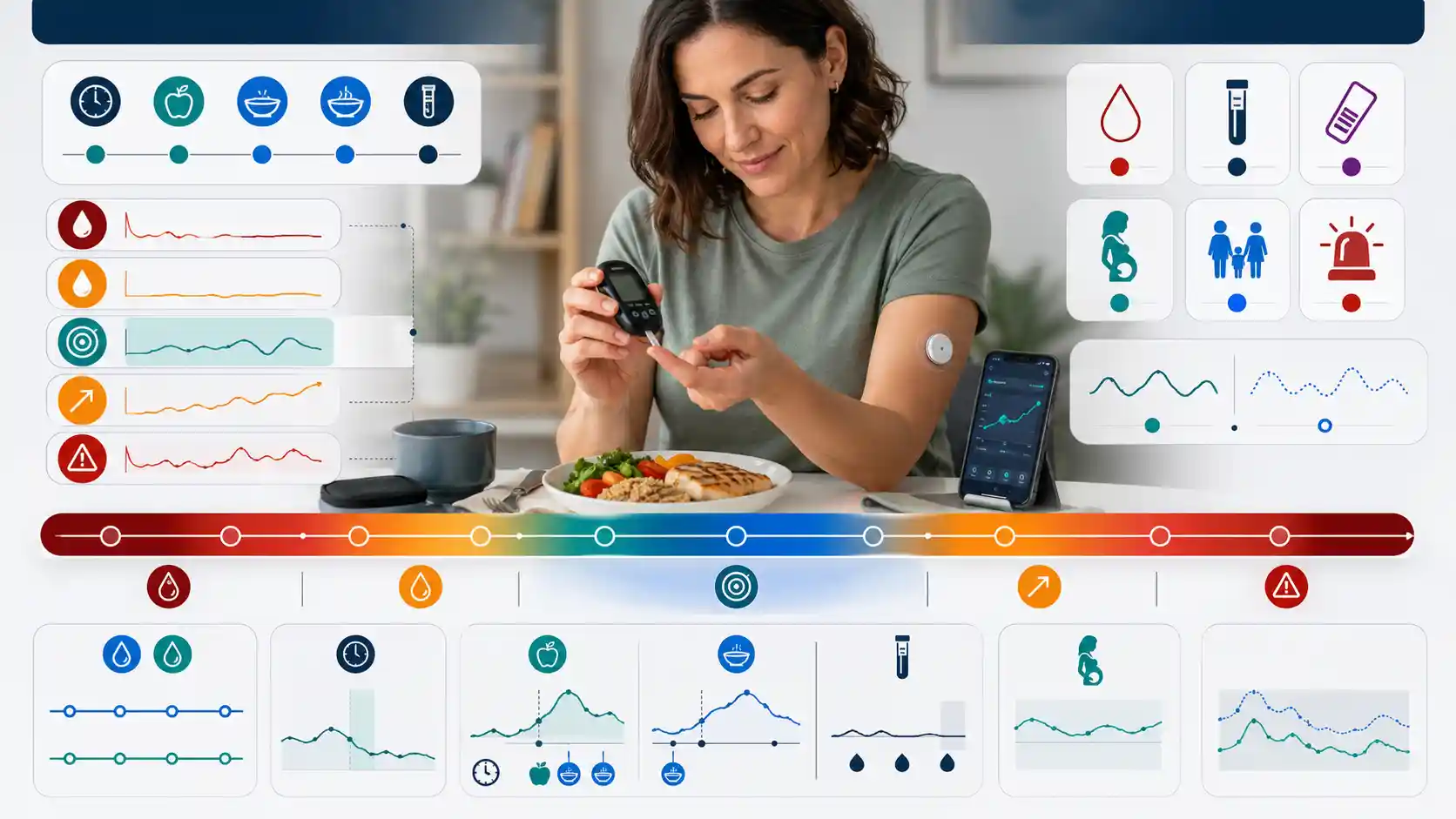
What blood sugar levels are normal, low, or high?
Blood sugar below 70 mg/dL is low. For many nonpregnant adults with diabetes, common targets are 80–130 mg/dL before meals and below 180 mg/dL one to two hours after a meal begins.
Diagnosis uses different rules. A fasting laboratory value of 126 mg/dL or higher or a two-hour oral glucose tolerance result of 200 mg/dL or higher reaches a diabetes threshold. The NIDDK diagnostic guidance explains why test conditions and confirmation matter.
- Low glucose
- <70 mg/dL
- Common premeal target
- 80–130 mg/dL
- Common postmeal target
- <180 mg/dL
- Fasting diabetes threshold
- ≥126 mg/dL
Treat promptly according to the personal plan. Below 54 mg/dL is clinically significant hypoglycemia.
This target applies to many nonpregnant adults with diabetes, not to diagnosis or every individual.
Measure one to two hours after the meal begins when this timing is part of the care plan.
This threshold applies to standardized laboratory plasma glucose and usually needs confirmation.
Blood sugar levels quick-reference chart
This overview separates diagnostic laboratory thresholds from daily monitoring targets. A home glucose meter or CGM can guide management but cannot confirm a diabetes diagnosis by itself.
Swipe horizontally inside the table to view every column.
| Situation | Blood glucose level | Meaning | Practical next step |
|---|---|---|---|
| Low glucose | Below 70 mg/dL (3.9 mmol/L) — Low blood sugar threshold | Hypoglycemia that requires prompt action, especially for people taking insulin or medicines that can cause lows. | If awake and able to swallow, use the personal low-glucose plan; many adults use 15 grams of fast carbohydrate and recheck after 15 minutes. |
| Clinically significant low | Below 54 mg/dL (3.0 mmol/L) — Clinically significant low | A more serious low associated with impaired thinking, seizures, loss of consciousness, or need for help. | Use glucagon if prescribed and seek emergency help when the person cannot safely self-treat. |
| Common premeal target | 80–130 mg/dL (4.4–7.2 mmol/L) — Common premeal target | A common target for many nonpregnant adults already diagnosed with diabetes. | Use the individual treatment plan; age, pregnancy, medicines, kidney disease, and hypoglycemia risk can change the goal. |
| Common postmeal target | Below 180 mg/dL (10.0 mmol/L) | A common target measured 1–2 hours after the beginning of a meal for many nonpregnant adults with diabetes. | Record meal timing and compare repeated patterns rather than one isolated result. |
| Fasting prediabetes laboratory range | 100–125 mg/dL (5.6–6.9 mmol/L) | Impaired fasting glucose on a properly performed laboratory test. | Discuss repeat or confirmatory testing with a healthcare professional. |
| Fasting diabetes laboratory threshold | 126 mg/dL (7.0 mmol/L) or higher | A diagnostic threshold on a fasting plasma glucose test. | Diagnosis usually requires confirmation on another day unless symptoms and other evidence make confirmation unnecessary. |
| Two-hour OGTT diabetes threshold | 200 mg/dL (11.1 mmol/L) or higher | A diagnostic threshold two hours after a 75-gram oral glucose tolerance test. | Use laboratory interpretation; ordinary meal readings are not interchangeable with an OGTT. |
| High glucose with illness or DKA risk | 250 mg/dL (13.9 mmol/L) or higher — Ketone-testing context | A level that can warrant ketone testing in people with diabetes, especially during illness or insulin deficiency. | Follow the sick-day plan, check ketones when instructed, hydrate as allowed, and seek urgent care for DKA symptoms. |
Blood glucose is shown in milligrams per deciliter (mg/dL) with millimoles per liter (mmol/L) in parentheses.
- • Diagnostic thresholds apply to standardized laboratory testing, not an isolated home meter or CGM reading.
- • Individual targets can be higher or lower according to age, pregnancy, health conditions, medicines, and risk of hypoglycemia.
Download or export
Blood sugar range visual for diabetes monitoring
This scale uses the common 70–180 mg/dL CGM target range for many nonpregnant adults with diabetes. It is not a diagnostic chart and does not replace an individual target plan.
Swipe horizontally on a narrow screen if the full scale is not visible. All values use mg/dL.
Five questions make a glucose number useful
Timing
Fasting, before meal, after meal, exercise, sleep, or illness
Method
Laboratory plasma, finger-stick meter, or continuous glucose monitor
Trend
One unexpected value, repeated pattern, rapid rise, or rapid fall
Symptoms
Shaking, confusion, thirst, vomiting, breathing change, or none
Context
Pregnancy, insulin, medicines, kidney disease, age, and personal targets
Blood sugar reading checker and unit converter
Enter a measured value, timing, and context. The checker distinguishes daily diabetes targets from laboratory diagnostic thresholds and pregnancy goals.
Converted value: 6.1 mmol/L
Within the common premeal target
110 mg/dL is within the common 80–130 mg/dL target for many nonpregnant adults with diabetes.
Use the individual target and look at repeated patterns. Pregnancy and high hypoglycemia risk use different goals.
This browser-only tool does not transmit the entered value. It cannot diagnose diabetes, replace a prescribed insulin calculator, or determine an emergency from a number without symptoms and context.
Diabetes diagnostic blood sugar chart
Laboratory tests diagnose diabetes and prediabetes. The fasting plasma glucose and two-hour oral glucose tolerance test use different conditions and cannot be compared as though they were the same test.
Swipe horizontally inside the table to view every column.
| Laboratory test | Normal result | Prediabetes result | Diabetes result | Key condition |
|---|---|---|---|---|
| Fasting plasma glucose | 99 mg/dL or lower | 100–125 mg/dL | 126 mg/dL or higher — Fasting diabetes threshold | No calories for at least 8 hours; water is generally allowed. |
| Two-hour 75-g oral glucose tolerance test | 139 mg/dL or lower | 140–199 mg/dL | 200 mg/dL or higher — OGTT diabetes threshold | Blood is measured two hours after a standardized glucose drink. |
| Random plasma glucose | No single diagnostic normal range | Not used to diagnose prediabetes | 200 mg/dL or higher with classic symptoms of hyperglycemia or hyperglycemic crisis — Random glucose diagnostic context | The sample can be taken at any time, regardless of the last meal. |
| A1C | Below 5.7% | 5.7–6.4% | 6.5% or higher | Reflects average glucose over roughly three months and can be unreliable in some blood conditions. |
| Confirmation | No diabetes-range result | Repeat according to risk and clinical guidance | Repeat the same test or use a different diagnostic test unless unequivocal hyperglycemia is present | Laboratory confirmation prevents diagnosis from a temporary or erroneous result. |
Plasma glucose values use mg/dL. Divide mg/dL by 18 to estimate mmol/L.
- • An ordinary after-meal finger-stick result is not the same as a two-hour oral glucose tolerance test.
- • Visit the ChartsLoom A1C Chart for A1C categories, eAG conversion, and factors that can distort A1C.
Download or export
Diagnostic ranges and daily targets are not interchangeable
A diagnostic range asks whether a standardized laboratory result meets criteria for prediabetes or diabetes. A daily target guides treatment after diagnosis. The same number can mean something different when it is fasting, after a meal, from a CGM, or measured during pregnancy.
The A1C Chart connects longer-term average glucose with estimated average glucose, while this page focuses on direct glucose measurements and their timing.
Blood sugar targets for most nonpregnant adults with diabetes
These are common population-level goals, not universal prescriptions. A clinician may adjust them to reduce hypoglycemia, support pregnancy, account for frailty, or match a specific treatment plan.
Swipe horizontally inside the table to view every column.
| Monitoring period | Common target | What the value describes | When a different target may be safer |
|---|---|---|---|
| Before a meal | 80–130 mg/dL (4.4–7.2 mmol/L) — Common premeal target | Preprandial capillary or plasma glucose before eating. | A higher target may be used with severe hypoglycemia risk, frailty, limited life expectancy, or complex illness. |
| 1–2 hours after meal begins | Below 180 mg/dL (10.0 mmol/L) — Common postmeal target | Postprandial glucose near the usual peak after food. | Pregnancy uses tighter targets; some individualized plans focus more on CGM patterns or meal-specific goals. |
| CGM target range | 70–180 mg/dL (3.9–10.0 mmol/L) | The commonly used time-in-range window for many adults with diabetes. | Pregnancy, older age, high hypoglycemia risk, and other conditions can use different ranges and time goals. |
| Time in range | At least 70% for many adults | About 17 of 24 hours between 70 and 180 mg/dL. | The target may be reduced when avoiding low glucose is the first priority. |
| Time below 70 mg/dL | Less than 4% for many adults | Minutes or hours spent below the low-glucose threshold. | People at high risk of severe hypoglycemia often need a stricter limit. |
| Time below 54 mg/dL | Less than 1% for many adults — Very low glucose exposure limit | Time spent in clinically significant hypoglycemia. | Any repeated exposure deserves treatment-plan review. |
| A1C relationship | Often below 7% for many adults | A longer-term goal that complements daily readings and CGM data. | The individual goal can be tighter or less stringent depending on benefits, burdens, and safety. |
Glucose values use mg/dL and mmol/L; CGM percentages describe time spent in a defined range.
- • A target is a management goal for a person already diagnosed with diabetes; it is not a diagnostic cutoff.
- • Daily glucose and A1C answer different questions. Use both when the care plan recommends them.
Download or export
Use patterns, not isolated glucose numbers
The American Diabetes Association monitoring guidance lists 80–130 mg/dL before meals and below 180 mg/dL one to two hours after a meal begins as common goals for many nonpregnant adults. Repeated highs, repeated lows, overnight patterns, and glucose variability often matter more than one result.
Low blood sugar levels and actions chart
Hypoglycemia is classified by glucose level and by the person’s ability to self-treat. Symptoms can occur before or after a meter crosses a numerical threshold.
Swipe horizontally inside the table to view every column.
| Level or situation | Glucose value | Common signs | Immediate action |
|---|---|---|---|
| Approaching low | 70–80 mg/dL with a downward trend | May have no symptoms; CGM arrow may show a rapid fall. | Follow the personal prevention plan, especially before exercise, driving, sleep, or insulin dosing. |
| Level 1 hypoglycemia | 54–69 mg/dL — Low glucose | Shaking, sweating, hunger, fast heartbeat, anxiety, dizziness, or irritability. | If conscious and able to swallow, many adults take 15 grams of fast carbohydrate and recheck after 15 minutes. |
| Level 2 hypoglycemia | Below 54 mg/dL — Clinically significant low | Confusion, weakness, blurred vision, poor coordination, behavior change, or severe symptoms. | Treat immediately. Use glucagon and emergency help if the person cannot safely swallow or self-treat. |
| Level 3 hypoglycemia | Any glucose level with severe cognitive or physical impairment requiring assistance | Seizure, unconsciousness, inability to swallow, or inability to self-treat. | Give glucagon if available, place the person safely on the side, call emergency services, and do not give food or drink by mouth. — Emergency action |
| After treatment | Recheck after about 15 minutes when using the 15-15 plan | Symptoms may improve before glucose fully recovers. | Repeat fast carbohydrate if still below 70 mg/dL, then eat a balanced snack or meal when appropriate. |
| Repeated lows | Two or more episodes or any severe episode | Nighttime lows, impaired awareness, exercise-related lows, or rebound highs. | Review medicines, insulin timing, meals, activity, alcohol, kidney function, and CGM alerts with the diabetes team. |
Blood glucose values use mg/dL. Below 70 mg/dL equals below 3.9 mmol/L; below 54 mg/dL equals below 3.0 mmol/L.
- • Do not give food or liquid to an unconscious person or anyone who cannot swallow safely.
- • Children, pregnancy, insulin pumps, exercise, and individualized care plans may require different treatment amounts or timing.
Download or export
Severe hypoglycemia is an emergency
The CDC low-glucose treatment guidance recommends prompt treatment below 70 mg/dL. When a person has a seizure, loses consciousness, cannot swallow, or cannot self-treat, use glucagon if available and call emergency services. Never give food or drink by mouth to an unconscious person.
High blood sugar levels and actions chart
A high number needs context: timing, illness, insulin access, ketones, symptoms, hydration, and the person’s treatment plan all affect urgency.
Swipe horizontally inside the table to view every column.
| Reading or pattern | Possible meaning | What to check | Safe response |
|---|---|---|---|
| Above the personal target | A single result may reflect food, stress, illness, missed medicine, reduced activity, or measurement error. | Confirm timing, wash and dry hands, repeat if unexpected, and review the trend. | Follow the prescribed correction or monitoring plan; do not stack extra medicine without instructions. |
| Repeated postmeal results at or above 180 mg/dL | Postmeal glucose is frequently above the common target for many adults with diabetes. | Meal composition, carbohydrate amount, medicine timing, activity, and CGM pattern. | Record the pattern and discuss persistent elevations with the diabetes team. |
| Glucose 250 mg/dL or higher during illness or insulin deficiency — Check ketones | Ketones and diabetic ketoacidosis become a concern, especially in type 1 diabetes. | Check ketones according to the sick-day plan and monitor glucose every 4–6 hours or as directed. | Contact the care team for moderate or high ketones; continue insulin according to the plan unless told otherwise. |
| Glucose remains 300 mg/dL or higher | Persistent severe hyperglycemia can accompany DKA or hyperosmolar crisis. | Ketones, vomiting, dehydration, breathing, mental status, and ability to keep fluids down. | Seek emergency care when the level stays this high or emergency symptoms are present. — Emergency threshold context |
| Fruity breath, vomiting, abdominal pain, deep breathing, confusion, or inability to drink | Possible diabetic ketoacidosis or another hyperglycemic emergency. | Do not delay care to keep checking the chart. | Call emergency services or go to an emergency department immediately. — Emergency symptoms |
| High CGM reading that conflicts with symptoms | Sensor lag, pressure on the sensor, medication interference, or device error may be possible. | Use a finger-stick meter when the device instructions or symptoms call for confirmation. | Treat the person and the confirmed value, not a graph alone. |
Glucose values use mg/dL. 250 mg/dL is about 13.9 mmol/L; 300 mg/dL is about 16.7 mmol/L.
- • Some sick-day plans use a ketone-testing threshold near 240 mg/dL; follow the written plan provided by the diabetes team.
- • SGLT2 medicines can be associated with ketoacidosis at glucose levels below the usual DKA range. Symptoms and ketones matter.
Download or export
High glucose becomes urgent when ketones or DKA symptoms appear
The CDC diabetic ketoacidosis guidance advises ketone checks during illness or when glucose reaches about 250 mg/dL in people at risk. Fruity breath, repeated vomiting, abdominal pain, deep breathing, confusion, high ketones, or inability to keep fluids down requires emergency care.
Pregnancy blood sugar targets chart
Pregnancy usually uses tighter glucose goals than nonpregnant diabetes care. The maternity and diabetes teams may personalize targets based on treatment, fetal growth, hypoglycemia risk, and type of diabetes.
Swipe horizontally inside the table to view every column.
| Timing | Common pregnancy goal | Measurement detail | Important context |
|---|---|---|---|
| Fasting or before breakfast | Below 95 mg/dL (5.3 mmol/L) — Fasting pregnancy goal | Measure after the instructed overnight fasting period. | A personal plan may define a lower bound to reduce hypoglycemia. |
| One hour after eating | Below 140 mg/dL (7.8 mmol/L) — One-hour pregnancy goal | Time from the beginning of the meal unless the care team specifies otherwise. | Use either the one-hour or two-hour schedule assigned by the maternity team. |
| Two hours after eating | Below 120 mg/dL (6.7 mmol/L) — Two-hour pregnancy goal | Time from the beginning of the meal. | Do not compare a two-hour result with a one-hour target. |
| Before meals, bedtime, and overnight | Individualized | Often used with preexisting type 1 or type 2 diabetes and insulin therapy. | The plan balances fetal exposure to high glucose against maternal hypoglycemia. |
| CGM during pregnancy | Pregnancy-specific range and time goals | Sensor glucose is interstitial and may lag behind blood glucose. | Confirm unexpected readings according to device instructions and the pregnancy care plan. |
| After delivery | Targets usually change | Insulin needs can fall rapidly after birth, especially with type 1 diabetes. | Use the postpartum medicine and monitoring plan; do not continue pregnancy doses automatically. |
Glucose values use mg/dL with mmol/L in parentheses.
- • Gestational-diabetes diagnostic testing uses a glucose challenge or oral glucose tolerance protocol; daily treatment targets are a separate concept.
- • Pregnancy with diabetes needs coordinated obstetric and diabetes care because both high and low glucose can be harmful.
Download or export
Pregnancy uses tighter and more frequent glucose monitoring
The ACOG pregnancy guidance lists common goals below 95 mg/dL fasting, below 140 mg/dL one hour after eating, and below 120 mg/dL two hours after eating. Gestational-diabetes screening thresholds and daily treatment targets are separate concepts.
The Baby Growth Percentile Chart explains fetal and infant growth references, but growth measurements cannot replace glucose monitoring during pregnancy.
Blood glucose testing methods chart
Each method measures a different sample or time window. A laboratory plasma test, finger-stick meter, CGM, and A1C result should not be treated as interchangeable.
Swipe horizontally inside the table to view every column.
| Method | What it measures | Best use | Key limitation |
|---|---|---|---|
| Laboratory plasma glucose | Glucose concentration in plasma from a venous blood sample. | Diagnosis, confirmation, and standardized clinical assessment. | Represents one moment and can change with fasting, meals, illness, stress, and medicines. |
| Finger-stick blood glucose meter | Capillary whole-blood sample converted to a plasma-equivalent result. | Immediate decisions, symptom checks, insulin dosing when prescribed, and CGM confirmation. | Technique, unwashed hands, strip storage, temperature, circulation, and device accuracy affect results. |
| Continuous glucose monitor | Glucose in interstitial fluid every few minutes. | Direction, patterns, time in range, overnight trends, and alerts. | Can lag behind blood during rapid change and may require meter confirmation. |
| A1C laboratory test | Percentage of hemoglobin with attached glucose over roughly three months. | Long-term management and, when appropriate, diagnosis. | Does not show daily highs or lows and can be distorted by anemia, hemoglobin variants, pregnancy, transfusion, and kidney disease. |
| Oral glucose tolerance test | Plasma response before and after a standardized glucose drink. | Prediabetes, diabetes, and pregnancy diagnosis according to the selected protocol. | Requires preparation and precise timing; it is not equivalent to an ordinary meal test. |
| Urine glucose | Glucose excreted into urine after the kidney threshold is exceeded. | Limited historical or special-purpose use. | Cannot reliably show current blood glucose and varies with kidney threshold and medicines. |
| Blood or urine ketones | Ketone production during insulin deficiency or prolonged fasting. | Assessing DKA risk during illness or high glucose according to a sick-day plan. | Ketones are not a replacement for glucose testing and need symptom-based interpretation. |
Use the units and reference range supplied with the specific laboratory or device.
- • Wash and dry hands before a finger-stick test because food residue can falsely raise the result.
- • When symptoms do not match a CGM reading, follow the device instructions for finger-stick confirmation and treatment.
Download or export
Blood sugar mg/dL to mmol/L conversion chart
Convert common glucose values between the units used in the United States and the units used in many other countries. Values are rounded to one decimal place.
Swipe horizontally inside the table to view every column.
| mg/dL | mmol/L | Common context |
|---|---|---|
| 40 | 2.2 | Severe low glucose |
| 54 | 3.0 | Clinically significant low threshold |
| 70 — Low glucose threshold | 3.9 | Low glucose threshold and lower edge of common CGM range |
| 80 | 4.4 | Lower edge of common premeal target |
| 90 | 5.0 | Example fasting value |
| 95 | 5.3 | Common fasting pregnancy goal ceiling |
| 100 | 5.6 | Beginning of fasting prediabetes range |
| 126 — Fasting diagnostic threshold | 7.0 | Fasting diabetes diagnostic threshold |
| 130 | 7.2 | Upper edge of common premeal target |
| 140 | 7.8 | One-hour pregnancy goal ceiling and beginning of two-hour OGTT prediabetes range |
| 180 — Common postmeal target ceiling | 10.0 | Common postmeal goal ceiling and upper edge of common CGM range |
| 200 | 11.1 | Two-hour OGTT diabetes threshold |
| 250 | 13.9 | Ketone-testing context during illness or insulin deficiency |
| 300 | 16.7 | Persistent severe hyperglycemia requiring urgent assessment with symptoms or ketones |
| 400 | 22.2 | Very high glucose requiring immediate use of the emergency or sick-day plan |
Formula: mmol/L = mg/dL ÷ 18. To convert mmol/L to mg/dL, multiply by 18.
- • Rounding can create a small difference from the exact value shown by a device or laboratory.
- • Conversion does not change the clinical context, timing, symptoms, or action plan attached to the reading.
Download or export
What can raise or lower blood sugar?
Blood glucose changes minute by minute. Interpret the value with food, medicine, activity, illness, sleep, alcohol, device quality, and the direction of change.
Food and meal timing
Carbohydrate amount, fiber, fat, protein, liquid sugar, portion size, and time since the meal shape the glucose rise and its duration.
Insulin and medicines
Dose, timing, missed medicine, injection site, pump interruption, steroids, and medicines that cause hypoglycemia can move glucose rapidly.
Activity and recovery
Exercise often lowers glucose, but intense activity can raise it temporarily. Delayed lows can occur for hours after activity.
Illness, stress, and sleep
Infection, pain, emotional stress, poor sleep, dehydration, and hormonal changes can increase glucose even when food intake is unchanged.
Alcohol
Alcohol can cause delayed low glucose, especially with insulin, sulfonylureas, exercise, or limited food. BAC does not predict glucose safety.
Measurement quality
Food residue on fingers, expired strips, poor circulation, sensor lag, compression, temperature, and device error can create misleading results.
Diabetes and high blood pressure often occur together. Use the Blood Pressure Chart to compare cardiovascular ranges, and use the Blood Pressure by Age Chart for pediatric and older-adult interpretation.
Blood sugar levels frequently asked questions
What is a normal fasting blood sugar level?
On a standardized fasting plasma glucose test, 99 mg/dL or lower is in the normal diagnostic category. A result from 100 to 125 mg/dL is in the prediabetes range, and 126 mg/dL or higher reaches the diabetes threshold. Home-meter readings cannot confirm a diagnosis.
What blood sugar is considered low?
Blood sugar below 70 mg/dL is low. A value below 54 mg/dL is clinically significant hypoglycemia and needs immediate treatment. Severe hypoglycemia means the person needs help, regardless of the measured number.
What should blood sugar be before eating?
For many nonpregnant adults with diabetes, a common premeal target is 80–130 mg/dL. The correct target may differ with pregnancy, age, frailty, kidney disease, medicines, or risk of severe low blood sugar.
What should blood sugar be after eating?
For many nonpregnant adults with diabetes, a common goal is below 180 mg/dL one to two hours after the meal begins. Pregnancy usually uses tighter one-hour and two-hour goals.
Can a home glucose meter diagnose diabetes?
No. A home meter can identify a concerning pattern, but diabetes diagnosis uses standardized laboratory testing and usually requires confirmation unless symptoms and unequivocal hyperglycemia are present.
Is 200 mg/dL always diabetes?
Not by itself. A two-hour oral glucose tolerance result of 200 mg/dL or higher reaches the diabetes threshold. A random plasma glucose of 200 mg/dL or higher can diagnose diabetes when classic symptoms or a hyperglycemic crisis are present. An ordinary after-meal home reading uses different conditions.
When should ketones be checked?
People with diabetes may need ketone testing when sick, when glucose is about 250 mg/dL or higher, when insulin delivery may have failed, or when DKA symptoms appear. Follow the written sick-day plan because thresholds can differ.
What is the 15-15 rule?
For a conscious person who can swallow, the 15-15 rule means taking 15 grams of fast-acting carbohydrate, waiting 15 minutes, and rechecking glucose. Repeat if the value remains below 70 mg/dL. Severe lows require glucagon and emergency help.
Why does CGM glucose differ from a finger-stick reading?
A CGM measures interstitial glucose, while a meter measures capillary blood. During rapid change, interstitial glucose can lag behind blood glucose. Pressure, sensor issues, medicines, temperature, and device accuracy can also contribute.
What is time in range?
Time in range is the percentage of CGM readings within a selected glucose window. For many adults with diabetes, the common range is 70–180 mg/dL and a common goal is at least 70% of the day, but individualized goals may differ.
Does stress raise blood sugar?
Yes. Illness, pain, emotional stress, poor sleep, dehydration, and steroid medicines can raise glucose through stress hormones and changes in insulin sensitivity. Persistent changes deserve review rather than repeated unplanned correction doses.
Can alcohol cause low blood sugar?
Yes. Alcohol can delay the liver’s release of glucose and increase delayed hypoglycemia risk, especially with insulin, sulfonylureas, missed food, or exercise. The ChartsLoom BAC Chart explains alcohol measurement, but BAC does not predict glucose safety.
Are pregnancy blood sugar targets different?
Yes. Common pregnancy goals are below 95 mg/dL fasting, below 140 mg/dL one hour after eating, and below 120 mg/dL two hours after eating. The maternity team may individualize these values.
When is high blood sugar an emergency?
Seek emergency care for fruity breath, repeated vomiting, deep or difficult breathing, confusion, severe dehydration, inability to keep fluids down, high ketones, or glucose that remains 300 mg/dL or higher. Symptoms can matter even when glucose is lower.
Sources
These references support the diagnostic thresholds, monitoring targets, hypoglycemia actions, DKA guidance, and pregnancy goals used on this page.
American Diabetes Association
Check Your Blood Glucose: Diabetes Testing and Monitoring
Common premeal and postmeal glucose targets for many nonpregnant adults with diabetes, plus individualized monitoring context.
https://diabetes.org/living-with-diabetes/treatment-care/checking-your-blood-sugar
National Institute of Diabetes and Digestive and Kidney Diseases
Diabetes Tests and Diagnosis
Fasting plasma glucose, oral glucose tolerance, random plasma glucose, confirmation, and pregnancy-screening context.
https://www.niddk.nih.gov/health-information/diabetes/overview/tests-diagnosis
Centers for Disease Control and Prevention
Treatment of Low Blood Sugar (Hypoglycemia)
The 70 mg/dL low-glucose threshold, the 15-15 rule, glucagon, and severe-hypoglycemia actions.
https://www.cdc.gov/diabetes/treatment/treatment-low-blood-sugar-hypoglycemia.html
Centers for Disease Control and Prevention
Diabetic Ketoacidosis
Ketone-testing context at high glucose levels and emergency signs such as persistent very high glucose, vomiting, fruity breath, and breathing difficulty.
https://www.cdc.gov/diabetes/about/diabetic-ketoacidosis.html
American College of Obstetricians and Gynecologists
Pregnancy With Type 1 or Type 2 Diabetes
Common fasting, one-hour postmeal, and two-hour postmeal glucose goals during pregnancy.
https://www.acog.org/womens-health/faqs/pregnancy-with-type-1-or-type-2-diabetes
The safest interpretation combines the number with its context
Check timing, symptoms, device method, trend, pregnancy status, medicines, illness, and the personal care plan. Treat low glucose promptly, use standardized laboratory tests for diagnosis, and seek urgent care for severe symptoms, high ketones, or inability to self-treat.