Health & Medical · Cardiovascular reference
Cholesterol Levels Chart for LDL, HDL and Triglycerides
Compare total cholesterol, LDL, HDL, non-HDL, and triglyceride levels. Use the detailed tables, unit converter, result checker, testing guidance, and risk-based context to understand what each lipid-panel value measures.
Do not choose a medicine or LDL target from a chart alone. Childhood, pregnancy, diabetes, kidney disease, coronary calcium, established cardiovascular disease, and current treatment require professional interpretation. Read the ChartsLoom Disclaimer.
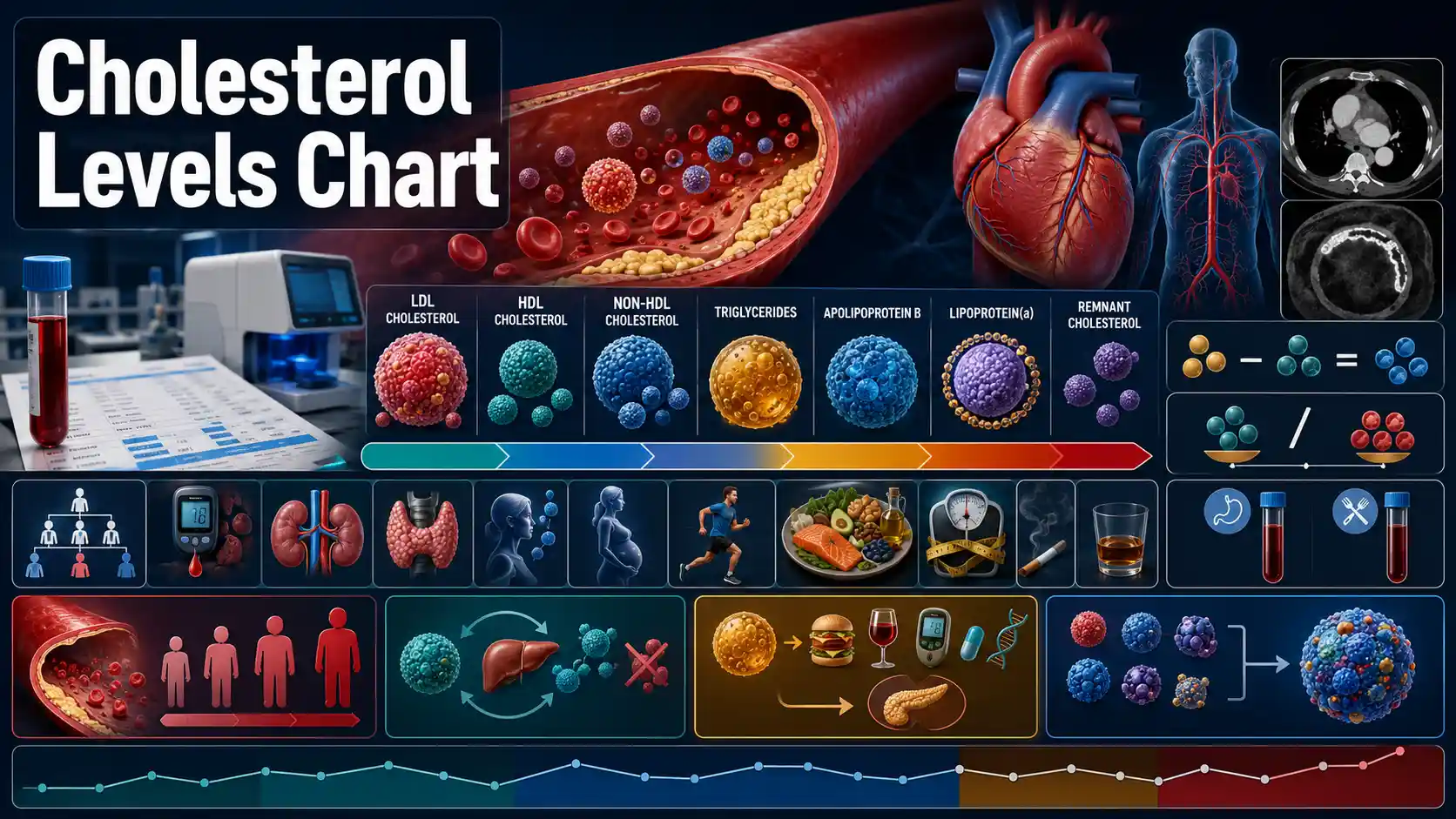
What cholesterol levels are considered healthy?
For many adults, broad desirable levels include total cholesterol below 200 mg/dL, LDL below 100 mg/dL, non-HDL below 130 mg/dL, and triglycerides below 150 mg/dL. HDL of 60 mg/dL or higher is favorable, while HDL below 40 mg/dL in men or 50 mg/dL in women is low.
These values are screening references, not universal treatment targets. The American Heart Association cholesterol guidance explains that LDL goals depend on total cardiovascular risk. Some people need LDL below 70 or 55 mg/dL.
- General adult LDL
- <100 mg/dL
- General non-HDL
- <130 mg/dL
- Triglycerides
- <150 mg/dL
- Severe adult LDL
- ≥190 mg/dL
Higher-risk adults may have goals below 70 or 55 mg/dL.
Subtract HDL from total cholesterol to calculate it.
A level of 500 mg/dL or higher needs prompt review.
This can indicate familial hypercholesterolemia.
Cholesterol levels quick-reference chart
These are broad screening references. Personal LDL and non-HDL goals can be lower when cardiovascular risk, diabetes, kidney disease, coronary calcium, or established artery disease is present.
Swipe horizontally inside the table to view every column.
| Lipid measurement | General desirable level | Higher or lower concern | What it represents |
|---|---|---|---|
| Total cholesterol, adults | <200 mg/dL | 200–239 mg/dL is borderline high; ≥240 mg/dL is high | Cholesterol carried in LDL, HDL, and other lipoproteins |
| LDL cholesterol | <100 mg/dL for many adults — Broad desirable adult LDL level | ≥160 mg/dL is high; ≥190 mg/dL is severe and may be inherited | Primary atherogenic cholesterol used for treatment decisions |
| Non-HDL cholesterol | <130 mg/dL for many adults | Risk-based goals may be <100 or <85 mg/dL | Total cholesterol minus HDL; includes LDL and remnant particles |
| HDL cholesterol, men | ≥60 mg/dL is favorable | <40 mg/dL is low | Cholesterol carried in HDL particles |
| HDL cholesterol, women | ≥60 mg/dL is favorable | <50 mg/dL is low | Cholesterol carried in HDL particles |
| Triglycerides | <150 mg/dL | 150–199 borderline high; 200–499 high; ≥500 severe — Severe triglyceride threshold | Circulating storage fat influenced by food, alcohol, diabetes, and genetics |
| Total cholesterol, age ≤19 | <170 mg/dL | 170–199 borderline; ≥200 high | Pediatric screening category |
| LDL cholesterol, age ≤19 | <110 mg/dL | 110–129 borderline; ≥130 high | Pediatric LDL category |
| Non-HDL cholesterol, age ≤19 | <120 mg/dL | 120–144 borderline; ≥145 high | Pediatric atherogenic-cholesterol category |
Cholesterol values are shown in mg/dL. Divide cholesterol by 38.67 and triglycerides by 88.57 to obtain mmol/L.
- • Descriptive categories do not automatically determine medication or a personal treatment goal.
- • A favorable HDL result does not cancel elevated LDL, non-HDL, triglycerides, smoking, diabetes, or other cardiovascular risk.
Download or export
How the lipid-panel values fit together
The four common values answer different questions. A complete interpretation uses the pattern rather than treating one number as the entire result.
Cholesterol is essential, but the carrier particles change risk
The body uses cholesterol to build cell membranes, hormones, and bile acids. LDL and other apoB-containing particles can deposit cholesterol in artery walls when exposure remains high. HDL carries cholesterol in a different pathway, but clinicians do not use HDL as a stand-alone treatment target.
LDL cholesterol levels and risk-based goals
LDL categories describe the laboratory result. A treatment goal depends on total cardiovascular risk and may be substantially lower than the general desirable level.
Swipe horizontally inside the table to view every column.
| LDL result or context | General meaning | Clinical context | Typical discussion |
|---|---|---|---|
| <70 mg/dL | Very low LDL range | Common goal for high-risk primary prevention or secondary prevention | Confirm that the value matches the personal plan |
| 70–99 mg/dL | Generally desirable | Often appropriate for many adults without very high risk | Continue risk-factor control and scheduled testing |
| 100–129 mg/dL | Near or above broad desirable level | May still exceed a risk-based goal | Review overall risk and trend |
| 130–159 mg/dL | Borderline high | Long-term LDL exposure becomes more important | Lifestyle review and risk calculation |
| 160–189 mg/dL | High | Risk-enhancing level, especially with family history | Prompt clinician review and inherited-risk assessment |
| ≥190 mg/dL — Severe LDL result | Severe hypercholesterolemia | Possible familial hypercholesterolemia | Prompt evaluation and family-history review |
| Borderline or intermediate prevention risk | Goal often <100 mg/dL | Uses PREVENT-ASCVD and risk enhancers | Shared treatment decision |
| High prevention risk | Goal often <70 mg/dL | More intensive lowering may be appropriate | Clinician-guided therapy |
| Very-high-risk established ASCVD | Goal <55 mg/dL — Very-high-risk LDL goal | Secondary prevention after major vascular disease | Intensive specialist-guided lowering |
LDL-C is shown in mg/dL. LDL-C mmol/L = mg/dL ÷ 38.67.
- • Lower LDL is generally associated with lower atherosclerotic cardiovascular risk, but treatment decisions require a complete clinical assessment.
- • LDL ≥190 mg/dL should not be managed by lifestyle changes alone without medical evaluation.
Download or export
LDL goals follow cardiovascular risk, not one universal normal range
The 2026 dyslipidemia guideline combines LDL, non-HDL, PREVENT-ASCVD risk, diabetes, kidney disease, family history, Lp(a), apoB, coronary calcium, and prior cardiovascular events. A result that appears near the general adult reference may still exceed the appropriate personal goal.
HDL cholesterol levels and interpretation
HDL contributes to risk assessment, but clinicians do not treat HDL as an isolated target. High HDL cannot neutralize high LDL or non-HDL cholesterol.
Swipe horizontally inside the table to view every column.
| HDL result | General adult interpretation | Important limitation | Helpful context |
|---|---|---|---|
| <40 mg/dL in men — Low HDL level in men | Low | Associated with higher cardiovascular risk | Review smoking, activity, weight, diabetes, and triglycerides |
| <50 mg/dL in women | Low | Associated with higher cardiovascular risk | Menopause and metabolic factors can affect the pattern |
| 40–59 mg/dL in men | Not low, but not interpreted alone | Does not cancel elevated LDL | Use the complete lipid panel and risk estimate |
| 50–59 mg/dL in women | Not low, but not interpreted alone | Does not cancel elevated LDL | Use the complete lipid panel and risk estimate |
| ≥60 mg/dL — Favorable HDL level | Favorable descriptive level | Not a treatment target | Continue attention to LDL, non-HDL, blood pressure, and smoking |
| Very high HDL | Not automatically more protective | Genetics, alcohol, liver disease, or other factors can contribute | Interpret with the full clinical picture |
| Child or teen >45 mg/dL | Acceptable pediatric level | Use pediatric ranges through age 19 | Low pediatric HDL is <40 mg/dL |
HDL-C values are shown in mg/dL. HDL-C mmol/L = mg/dL ÷ 38.67.
- • Exercise, avoiding tobacco, and a heart-healthy eating pattern can support a healthier lipid profile, but raising HDL alone is not the main treatment objective.
- • HDL should never be subtracted mentally from LDL risk; non-HDL is the actual calculated measure that subtracts HDL from total cholesterol.
Download or export
Triglyceride levels and action context
Triglycerides are blood fats rather than cholesterol. The result can change after meals, with alcohol intake, during poor diabetes control, and with several medicines or medical conditions.
Swipe horizontally inside the table to view every column.
| Triglyceride result | General adult category | Why it matters | Typical next step |
|---|---|---|---|
| <150 mg/dL — Usual adult triglyceride level | Usually normal | Lower pancreatitis and remnant-particle concern | Interpret with LDL, non-HDL, HDL, glucose, and risk |
| 150–199 mg/dL | Borderline high | Can reflect insulin resistance or lifestyle factors | Review alcohol, refined carbohydrates, weight, diabetes, and medicines |
| 200–499 mg/dL | High | Atherogenic remnant particles and metabolic risk become more important | Clinical evaluation and cause-directed treatment |
| ≥500 mg/dL — Severe triglyceride result | Severe | Pancreatitis risk becomes a treatment priority | Prompt clinician-guided management |
| ≥1,000 mg/dL | Markedly severe | Pancreatitis risk can be substantial | Urgent specialist-directed management |
| Child age 0–9: <75 mg/dL | Acceptable pediatric level | Pediatric cutoff is lower | Use age-specific follow-up |
| Child age 10–19: <90 mg/dL | Acceptable pediatric level | Puberty and metabolic health affect context | Use age-specific follow-up |
| Pregnancy | Can rise physiologically | Very high values can still be dangerous | Obstetric and lipid-specialist interpretation |
Triglyceride mmol/L = mg/dL ÷ 88.57.
- • A nonfasting triglyceride result can be useful, but a fasting repeat may be requested when the value is elevated or treatment decisions depend on precision.
- • Severe upper abdominal pain, vomiting, and very high triglycerides require prompt assessment for pancreatitis.
Download or export
Severe triglycerides create a different safety problem
Triglycerides of 500 mg/dL or higher need prompt clinical attention because pancreatitis prevention becomes important. Severe upper abdominal pain, repeated vomiting, or a markedly high result requires urgent assessment rather than waiting for a routine cholesterol visit.
Cholesterol result checker and unit converter
Enter available lipid-panel values to apply broad descriptive cut points, convert units, calculate non-HDL cholesterol, and show the total-to-HDL ratio. The tool does not calculate PREVENT-ASCVD risk or recommend medicine.
Total cholesterol: 0 mg/dL
Desirable by this general chart
General adult descriptive category. Total cholesterol cannot replace LDL, non-HDL, HDL, triglycerides, and total cardiovascular risk.
LDL cholesterol: 0 mg/dL
Desirable by this general chart
General adult category; personal goals may be lower. A treatment decision depends on cardiovascular risk rather than this category alone.
Calculated non-HDL cholesterol: 0 mg/dL
Desirable by this general chart
Total cholesterol minus HDL cholesterol. Non-HDL includes LDL and other atherogenic cholesterol-carrying particles.
HDL cholesterol: 0 mg/dL
Low by this general chart
Low level. HDL does not cancel high LDL, non-HDL, triglycerides, or other cardiovascular risk.
Triglycerides: 0 mg/dL
Desirable by this general chart
General adult category. Meals, alcohol, diabetes, illness, medicines, and fasting status can change triglycerides.
Non-HDL, apoB, Lp(a), and advanced lipid markers
These measurements can refine risk when the standard lipid panel does not fully explain the clinical picture.
Swipe horizontally inside the table to view every column.
| Marker | What it measures | When it helps | Important interpretation point |
|---|---|---|---|
| Non-HDL cholesterol | Total cholesterol minus HDL | High triglycerides, diabetes, obesity, and general risk assessment | Includes LDL plus other atherogenic cholesterol |
| Apolipoprotein B | Number of atherogenic lipoprotein particles | High triglycerides, diabetes, metabolic syndrome, or discordant LDL and non-HDL | One apoB molecule generally represents one atherogenic particle |
| Lipoprotein(a) | Mostly inherited LDL-like particle | At least once in adulthood and with premature family heart disease | Common risk-enhancing level is ≥125 nmol/L or ≥50 mg/dL — Lp(a) risk-enhancing level |
| Total-to-HDL ratio | Total cholesterol divided by HDL | Descriptive context in some reports | Does not replace LDL, non-HDL, apoB, or formal risk assessment |
| Remnant cholesterol | Cholesterol in triglyceride-rich particles | High triglycerides or metabolic disease | Not routinely reported by every laboratory |
| Coronary artery calcium | Calcified coronary plaque, not a blood lipid | Uncertain treatment decisions in selected adults | A score can refine risk but does not replace lipid testing |
Non-HDL, apoB, and Lp(a) may be reported in mg/dL; Lp(a) can also be reported in nmol/L. These units are not directly interchangeable.
- • Do not convert Lp(a) between mg/dL and nmol/L using a single universal factor because particle size varies.
- • Advanced markers are most useful when they answer a specific risk or treatment question.
Download or export
Advanced markers answer specific risk questions
Lp(a) is largely inherited and current guidance supports measuring it at least once in adulthood. ApoB can help when triglycerides, diabetes, or metabolic syndrome make LDL cholesterol underestimate particle burden. Coronary calcium is an imaging measure, not a cholesterol value, but it can refine selected treatment decisions.
Lipid panel testing, fasting, and repeat checks
Preparation and follow-up depend on the purpose of testing, prior results, triglycerides, medicines, and cardiovascular risk.
Swipe horizontally inside the table to view every column.
| Testing situation | Fasting needed? | What the test can show | Follow-up context |
|---|---|---|---|
| Routine screening | Often no — Routine screening may be nonfasting | Total, HDL, non-HDL, and usually LDL and triglycerides | A fasting repeat may follow an abnormal result |
| Elevated triglycerides | Often requested | More stable triglyceride and calculated LDL assessment | Avoid alcohol and follow laboratory instructions |
| Before starting treatment | Clinician-specific | Baseline lipid pattern | May be combined with liver, thyroid, glucose, or kidney tests |
| After treatment starts or changes | Use the same preparation when possible | Response and adherence | Repeat interval follows the treatment plan |
| Suspected familial hypercholesterolemia | Not always essential for the initial finding | Severe LDL elevation and family pattern — Severe LDL and inherited risk | Repeat confirmation and family screening |
| Acute illness | Result may shift temporarily | Inflammation and illness can lower or alter some values | Repeat after recovery when clinically appropriate |
| Pregnancy | Clinician-specific | Physiologic lipid rise and severe triglyceride risk | Obstetric interpretation is required |
| Home cholesterol device | Follow device instructions | Approximate screening value | Do not use it to diagnose or change medicine |
Follow the laboratory and clinician instructions for fasting duration, medicines, supplements, alcohol, and timing.
- • High cholesterol usually causes no symptoms; testing is the only reliable way to know the lipid levels.
- • Try to compare trends from similar preparation conditions and, when possible, the same laboratory method.
Download or export
Do you need to fast before a cholesterol test?
Many routine lipid panels can be nonfasting. The CDC cholesterol-testing guidance notes that a clinician may request an 8- to 12-hour fast. Fasting is more likely when triglycerides are elevated, a calculated LDL needs confirmation, or the treatment plan requires a standardized sample.
Factors that raise or change cholesterol levels
Several modifiable, inherited, hormonal, medical, and medication-related factors can change a lipid panel.
Swipe horizontally inside the table to view every column.
| Factor | Common lipid effect | Useful clue | What to discuss |
|---|---|---|---|
| Familial hypercholesterolemia | Marked LDL elevation — Inherited severe LDL pattern | LDL ≥190 mg/dL in an adult or early family heart disease | Family screening and specialist evaluation |
| Saturated and trans fats | Can raise LDL | Diet high in fatty meats, full-fat dairy, or processed foods | Gradual heart-healthy food substitutions |
| Refined carbohydrates and excess alcohol | Often raise triglycerides | High triglycerides with metabolic risk | Alcohol and carbohydrate review |
| Diabetes or insulin resistance | High triglycerides, low HDL, small dense LDL pattern | Elevated glucose or A1C | Glucose management and overall cardiovascular risk |
| Hypothyroidism | Can raise LDL and triglycerides | Fatigue, cold intolerance, or abnormal thyroid test | Thyroid testing when appropriate |
| Kidney disease | Can change triglycerides, HDL, and LDL-related risk | Reduced kidney function or proteinuria | Kidney-specific cardiovascular plan |
| Liver or bile-duct disease | Can alter total cholesterol and lipoproteins | Abnormal liver tests or jaundice | Liver evaluation |
| Menopause | LDL may rise and body-fat distribution can change | Hormonal transition | Complete risk-factor review |
| Pregnancy | Total cholesterol and triglycerides normally rise | Gestational stage | Obstetric interpretation; severe triglycerides need attention |
| Medicines | Effect varies by drug | Steroids, retinoids, some diuretics, antipsychotics, hormones, and others | Never stop prescribed medicine without guidance |
| Smoking | Often lowers HDL and increases vascular risk | Tobacco exposure | Cessation support |
| Physical inactivity and excess body weight | Can raise triglycerides and lower HDL | Sedentary pattern and central adiposity | Gradual activity and nutrition plan |
The direction and size of change differ among individuals and conditions.
- • A secondary-cause review is especially important when a lipid result changes suddenly or is much higher than expected.
- • Genetic high cholesterol often requires medication in addition to lifestyle measures.
Download or export
High cholesterol usually has no symptoms
The MedlinePlus cholesterol overview emphasizes that testing is necessary because a person can feel well while LDL remains high for years. Symptoms such as chest pain or stroke signs indicate a possible cardiovascular event, not an early warning from the cholesterol number itself.
Cholesterol results and practical next steps
The safest next step depends on the result, symptoms, cardiovascular history, pregnancy, age, and whether the person already uses lipid-lowering treatment.
Swipe horizontally inside the table to view every column.
| Result or situation | Why it matters | Recommended timing | Safe action |
|---|---|---|---|
| LDL <100 mg/dL without major risk | Broad desirable range for many adults | Routine follow-up | Maintain healthy habits and scheduled screening |
| LDL 130–159 mg/dL | Borderline-high exposure | Nonurgent clinician discussion | Review complete risk and repeat plan |
| LDL 160–189 mg/dL | High and risk-enhancing | Prompt appointment | Assess family history, lifetime risk, and secondary causes |
| LDL ≥190 mg/dL — Severe LDL result | Severe and possibly inherited | Prompt clinical evaluation | Do not rely on lifestyle alone; discuss family screening |
| Triglycerides 200–499 mg/dL | High metabolic and remnant-particle burden | Prompt routine review | Check diabetes, alcohol, diet, thyroid, kidney, and medicines |
| Triglycerides ≥500 mg/dL | Pancreatitis prevention becomes important | Prompt clinician contact | Follow a clinician-directed treatment plan |
| Very high triglycerides plus severe abdominal pain or vomiting | Possible pancreatitis | Urgent or emergency assessment — Possible pancreatitis emergency | Seek immediate medical care |
| Low HDL with high LDL or triglycerides | Combined risk pattern | Routine or prompt review based on values | Address the complete lipid profile and overall risk |
| New muscle pain, weakness, dark urine, or severe symptoms while taking medicine | May require medication-safety assessment | Prompt or urgent depending on severity | Contact the prescribing clinician; do not self-adjust |
| Pregnancy or breastfeeding with abnormal lipids | Medicine choices and expected values differ | Obstetric consultation | Do not start or stop lipid medicine without specialist guidance |
| Child or teen with abnormal result | Uses pediatric cutoffs and family context | Pediatric follow-up | Confirm the result and assess family risk |
This chart provides general urgency context and cannot replace a personal clinical plan.
- • Cholesterol itself usually produces no warning symptoms, so a high result deserves follow-up even when the person feels well.
- • Chest pain, stroke symptoms, severe shortness of breath, or collapse require emergency services regardless of the cholesterol result.
Download or export
Cholesterol unit conversion chart
Laboratories commonly report cholesterol in mg/dL or mmol/L. The conversion factor differs for cholesterol and triglycerides.
Swipe horizontally inside the table to view every column.
| Measurement | mg/dL | Approximate mmol/L | Conversion rule |
|---|---|---|---|
| Cholesterol | 40 | 1.03 | mg/dL ÷ 38.67 |
| Cholesterol | 50 | 1.29 | mg/dL ÷ 38.67 |
| Cholesterol | 70 | 1.81 | mg/dL ÷ 38.67 |
| Cholesterol | 100 — Common LDL reference conversion | 2.59 | mg/dL ÷ 38.67 |
| Cholesterol | 130 | 3.36 | mg/dL ÷ 38.67 |
| Cholesterol | 160 | 4.14 | mg/dL ÷ 38.67 |
| Cholesterol | 190 | 4.91 | mg/dL ÷ 38.67 |
| Cholesterol | 200 | 5.17 | mg/dL ÷ 38.67 |
| Cholesterol | 240 | 6.21 | mg/dL ÷ 38.67 |
| Triglycerides | 90 | 1.02 | mg/dL ÷ 88.57 |
| Triglycerides | 150 | 1.69 | mg/dL ÷ 88.57 |
| Triglycerides | 200 | 2.26 | mg/dL ÷ 88.57 |
| Triglycerides | 500 — Severe triglyceride conversion | 5.65 | mg/dL ÷ 88.57 |
| Triglycerides | 1,000 | 11.29 | mg/dL ÷ 88.57 |
Converted values are rounded to two decimal places.
- • Use the cholesterol factor for total, LDL, HDL, and non-HDL cholesterol.
- • Do not use these factors to convert Lp(a) between mg/dL and nmol/L.
Download or export
Children and teenagers use lower lipid cut points
Pediatric acceptable levels include total cholesterol below 170 mg/dL, LDL below 110 mg/dL, non-HDL below 120 mg/dL, and HDL above 45 mg/dL. The NHLBI pediatric lipid guidance also uses different triglyceride cutoffs for children younger than 10 and those ages 10–19. Use the Cholesterol Level by Age Chart for a life-stage-specific reference.
Frequently asked questions
What is a healthy cholesterol level?
For many adults, broad desirable levels include total cholesterol below 200 mg/dL, LDL below 100 mg/dL, non-HDL below 130 mg/dL, and triglycerides below 150 mg/dL. Personal LDL goals can be lower when cardiovascular risk is higher.
Which cholesterol number matters most?
LDL cholesterol is the main treatment target for reducing atherosclerotic cardiovascular risk. Non-HDL cholesterol and apoB can add useful information, especially when triglycerides are high or LDL and particle burden appear discordant.
Is HDL always good?
Higher HDL is often associated with lower risk, but HDL is not an isolated treatment target. A high HDL value cannot cancel high LDL, smoking, diabetes, high blood pressure, or established cardiovascular disease.
What is non-HDL cholesterol?
Non-HDL cholesterol equals total cholesterol minus HDL cholesterol. It includes LDL and other cholesterol carried in atherogenic particles, making it useful when triglycerides are elevated.
When is LDL considered dangerously high?
An LDL result of 190 mg/dL or higher is severe hypercholesterolemia and can indicate familial hypercholesterolemia. It needs prompt clinical evaluation rather than lifestyle changes alone.
When are triglycerides dangerous?
Triglycerides at 500 mg/dL or higher require prompt clinical attention because pancreatitis prevention becomes important. Very high triglycerides with severe abdominal pain or vomiting need urgent assessment.
Do I need to fast for a cholesterol test?
Many routine lipid panels can be nonfasting. A clinician may request an 8- to 12-hour fast when triglycerides are elevated, a calculated LDL needs confirmation, or the treatment decision requires a standardized sample.
Can cholesterol be high without symptoms?
Yes. High cholesterol usually causes no symptoms. A blood test is the only reliable way to know the lipid levels before artery disease causes a complication.
What causes high LDL cholesterol?
Common causes include inherited conditions, saturated-fat intake, hypothyroidism, kidney disease, diabetes, some medicines, smoking, physical inactivity, and excess body weight. Severe LDL elevation often has a strong genetic component.
Can cholesterol change quickly?
Triglycerides can change after meals, alcohol, illness, and glucose fluctuations. LDL and HDL usually change more gradually, although pregnancy, major weight change, thyroid disease, and medicines can produce meaningful shifts.
What is the total cholesterol to HDL ratio?
The ratio divides total cholesterol by HDL cholesterol. Some reports use it as descriptive context, but it does not replace LDL, non-HDL, apoB, Lp(a), or a validated cardiovascular-risk assessment.
Should everyone have an Lp(a) test?
Current guidance recommends measuring lipoprotein(a) at least once in adulthood because it is largely inherited and can reveal risk that the standard lipid panel misses.
Are cholesterol ranges different for children?
Yes. People age 19 or younger use pediatric cut points, including total cholesterol below 170 mg/dL and LDL below 110 mg/dL as acceptable screening levels.
Can lifestyle changes replace cholesterol medicine?
Lifestyle changes support every cholesterol plan, but severe inherited LDL elevation or high cardiovascular risk often requires medicine as well. A clinician should decide whether lifestyle measures alone are sufficient.
Sources
Reference intervals and treatment goals can change with laboratory methods, risk level, age, pregnancy, and clinical guidelines. Use the report-specific range and personal care plan when they differ from a general chart.
1. American Heart Association and American College of Cardiology: 2026 Guideline on the Management of Dyslipidemia
Current risk-based LDL and non-HDL goals, PREVENT-ASCVD assessment, Lp(a), apoB, coronary calcium, and treatment context.
https://www.ahajournals.org/doi/10.1161/CIR.0000000000001423
2. MedlinePlus, U.S. National Library of Medicine: Cholesterol Levels: What You Need to Know
General desirable levels for total cholesterol, LDL, HDL, non-HDL, and triglycerides, plus screening intervals and common influences.
https://medlineplus.gov/cholesterollevelswhatyouneedtoknow.html
3. American Heart Association: What Your Cholesterol Levels Mean
Current interpretation of LDL, HDL, triglycerides, risk-based goals, and lifestyle context.
https://www.heart.org/en/health-topics/cholesterol/about-cholesterol/what-your-cholesterol-levels-mean
4. Centers for Disease Control and Prevention: Testing for Cholesterol
Lipid-panel components, testing preparation, screening frequency, and the role of complete cardiovascular-risk assessment.
https://www.cdc.gov/cholesterol/testing/index.html
5. National Heart, Lung, and Blood Institute: Integrated Guidelines for Cardiovascular Health in Children and Adolescents
Pediatric acceptable, borderline, and high cut points for total, LDL, non-HDL, HDL, and triglycerides.
https://www.nhlbi.nih.gov/files/docs/guidelines/peds_guidelines_full.pdf
Use a trend from comparable tests whenever possible. A single lipid panel is most useful when combined with family history, blood pressure, glucose, smoking status, kidney health, medicines, and cardiovascular history.